
Last Updated: November 16, 2026
Quick Summary
After hours call answering for roofers is a system, not a voicemail box: route the call, qualify it, dispatch it, and follow up. Set coverage windows, configure scheduled forwarding with failover, load emergency and estimate scripts, then test each window and review the log weekly.
- Define business, after-hours, and weekend/holiday windows before comparing vendors.
- Use a scheduled forwarding rule with failover to a second number or on-call cell.
- The first intake question is always urgency: is water coming into the house right now?
- Wake the on-call employee for Tier 1 and Tier 2 calls, never for Tier 4.
- Review the log weekly for answer rate, time to answer, and emergency versus estimate tags.
Table of Contents
- Set Up After-Hours Call Answering for Roofers in Four Steps
- Roofing Lead Intake Questions That Separate Emergencies From Estimates
- The Roofing On-Call Dispatch Process, From Ring to Rooftop
- Answering Service Cost for Roofing Companies: What Drives the Bill
- Frequently Asked Questions
Set Up After-Hours Call Answering for Roofers in Four Steps
After hours call answering for roofers is a system, not a voicemail box, and after hours call answering is the first piece of it. Effective after-hours coverage is a system: route the call, qualify it, dispatch it, and follow up. Missed calls become missed leads, and a storm does not wait for business hours.
Step 1: Choose your coverage hours before you choose a vendor
Define three windows: business hours (for example 7 a.m. to 5 p.m.), after-hours (5 p.m. to 7 a.m. weekdays), and weekend/holiday. Decide which get live answering, which get AI intake, and which roll to voicemail with a callback promise. Write the schedule down before you compare options.
Step 2: Configure call forwarding and failover
Forward the main line at the start of each after-hours window using your phone system’s scheduled forwarding rule, not a manual star code. Set a failover: if the service does not pick up within a set number of rings, the call rolls to a second number or the on-call cell. Confirm with your carrier whether forwarding consumes plan minutes.
Step 3: Load the intake script and the routing rules
Give any answering team two scripts: an emergency script and an estimate script. The first question is always urgency. Active leak or safety hazard rings the on-call crew immediately; storm damage with no active water rings the crew during a storm event and books first thing otherwise; estimate requests get booked into the next business day. Provide your service area ZIP codes so out-of-area callers can be handled differently.
Step 4: Test the workflow, then review the log weekly
Run a live test call in each window: one emergency, one estimate, one after-hours billing question. Confirm the on-call phone rings, the message reaches the right inbox, and the call appears in the log. Review the log weekly for answer rate, average time to answer, and emergency versus estimate tags, and adjust from that data.
The full setup for a roofing phone system is covered here, including how calls route across devices.
The setup runs on four steps, each with its own job.
| Step | What to do | Detail |
|---|---|---|
| Step 1 | Choose coverage hours | Business, after-hours, weekend/holiday windows |
| Step 2 | Configure forwarding and failover | Scheduled forwarding rule; roll to second number or on-call cell |
| Step 3 | Load intake script and routing rules | Emergency script and estimate script; provide service area ZIP codes |
| Step 4 | Test the workflow, review log weekly | Test call in each window; track answer rate and time to answer |
Roofing Lead Intake Questions That Separate Emergencies From Estimates
The first question decides everything: “Is water coming into the house right now?” A yes moves the caller to emergency handling; a no moves them to an estimate request. Trained operators should capture name, address, roof type, age, and whether insurance is involved.
The emergency triage decision tree
Use four tiers and route each one differently.
- Tier 1, Safety hazard. Sagging roof deck, a hole in the roof, downed power lines on the roof, or anyone injured. Tell the caller to stay off the roof, call 911 if there is immediate danger, and wake the on-call employee.
- Tier 2, Active water intrusion. Water coming through the ceiling or down a wall. Capture the address, where water is entering, and whether the caller can safely place a bucket or tarp. Wake the on-call employee if water is near electrical fixtures or spreading.
- Tier 3, Storm damage, no active water. Missing shingles, a fallen limb, or visible damage with the house dry. Book a first-thing appointment and text the crew; do not wake anyone overnight.
- Tier 4, Estimate or routine request. No damage or a planned replacement. Book into the next business day and send a confirmation.
The intake script
Read these in order and record the answers:
- “Is anyone hurt, and is water coming into the house right now?”
- “What is the service address, including ZIP code?”
- “What type of roof is it, asphalt shingle, metal, tile, or flat?”
- “Roughly how old is the roof, and when did you first notice the problem?”
- “Is the damage from a storm, and have you contacted your insurance company?”
- “How would you like to be reached, and what is the best number?”
- “Would a morning or afternoon appointment work better?”
Escalation and handoff rules
Set a written rule for when the on-call employee is woken: Tier 1 and Tier 2 always, Tier 3 only during a declared storm event, Tier 4 never. The agent should text the roofing team the address, tier, and a one-line summary so the crew has context before calling back. An AI receptionist can run this intake automatically and pass qualified leads to your team; see how call handling works.
The Roofing On-Call Dispatch Process, From Ring to Rooftop
Dispatch starts with the ring. Effective after-hours coverage answers, triages, then routes urgent calls to the on-call team, ideally by simultaneous ring so that several people hear the call at once.
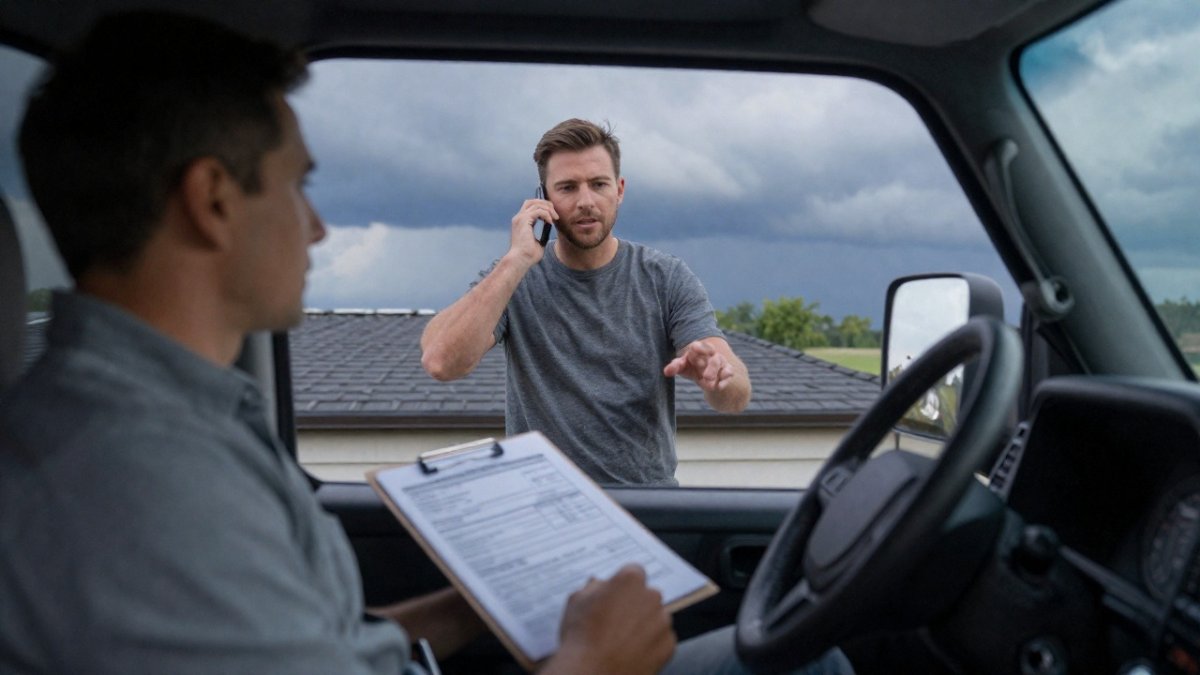
Non-urgent calls become appointments booked into the next business day. Two pages explain the mechanics: simultaneous ring across devices and improving your call answer rate.
Answering Service Cost for Roofing Companies: What Drives the Bill
Pricing depends on call volume, hours covered, and how much handling you want. For current prices or a quote, contact Carolina Digital Phone directly.
- Minutes or calls included per month
- Overage rates
- Live agents versus AI versus hybrid
- Setup, equipment, and contract terms
Ask for the full monthly cost in writing, taxes and fees included. For a breakdown of what moves the number, see what drives your monthly bill.
Storm season exposes every gap in your call coverage. Carolina Digital Phone has served businesses since 2000 with hosted VoIP, business texting, and an AI receptionist that answers around the clock, backed by a local team that picks up when you call.
Frequently Asked Questions
How much does after-hours call answering cost for a roofing company?
Pricing usually follows one of three models: per minute, per call, or a flat monthly plan with a set number of minutes included. A small crew that gets a handful of storm calls a month often lands on a lower flat plan, while a company fielding dozens of weekend leak reports pays more in overage. Ask for the full monthly figure in writing, including setup, taxes, and any charge for dispatching to an on-call tech. Pricing depends on call volume and features, so request a quote from Carolina Digital Phone for current prices rather than relying on a starter rate.
What should an after-hours answering service ask a roofing caller?
The intake should capture the caller’s name, callback number, property address, and what is happening: active leak, missing shingles, tree impact, or a request for an estimate. Ask whether water is entering the living space and whether the caller has already tried temporary measures. Those two answers sort urgent calls from routine ones. Also confirm the roof type and whether the caller is the owner, a tenant, or a property manager, since that changes who approves the work and who gets the dispatch.
Should a live answering service dispatch calls to an on-call roofer or just take a message?
Dispatch when the caller describes active water intrusion, structural damage, or a safety hazard, and take a message for estimate requests and cosmetic issues. Give the answering team a written escalation rule so the decision is not left to guesswork: for example, leaks into living space go straight to the on-call tech, while a missing shingle waits for the morning callback list. Confirm the on-call rotation weekly so the service never wakes the wrong person, and set a backup contact for nights when the primary does not pick up.