US landlines have no single nationwide shutdown date. Traditional copper service is being retired through provider-specific changes, so your business’s deadline depends on its location and service notice. Replacing copper does not necessarily mean losing your telephone number or desk phones. Start planning around the affected lines rather than a headline announcing the end of every landline.
When landlines change depends on the service and location
Three changes have different consequences. Copper retirement replaces physical network infrastructure. Service discontinuance ends a particular offering. Grandfathering closes an offering to new customers while maintaining it for existing customers. A notice about one does not automatically announce the others.
The useful timeline separates national policy from local service dates:
- August 2, 2019: FCC Order 19-72 was released. It addressed certain wholesale copper-loop and resale obligations, rather than ordering every retail landline disconnected.
- March 26, 2026: The FCC adopted rules streamlining network modernization and service-discontinuance procedures.
- October 8, 2026: An application affecting legacy voice service in 20 Iowa cities requested this effective date. The state regulator distinguishes requested dates from approved changes.
None of these milestones creates a universal cutoff for businesses in North Carolina, South Carolina, or Virginia. An application, approval, and customer disconnection can occur at different times. Use the effective date attached to your actual service, not another state’s timetable.
Why copper landlines are being replaced
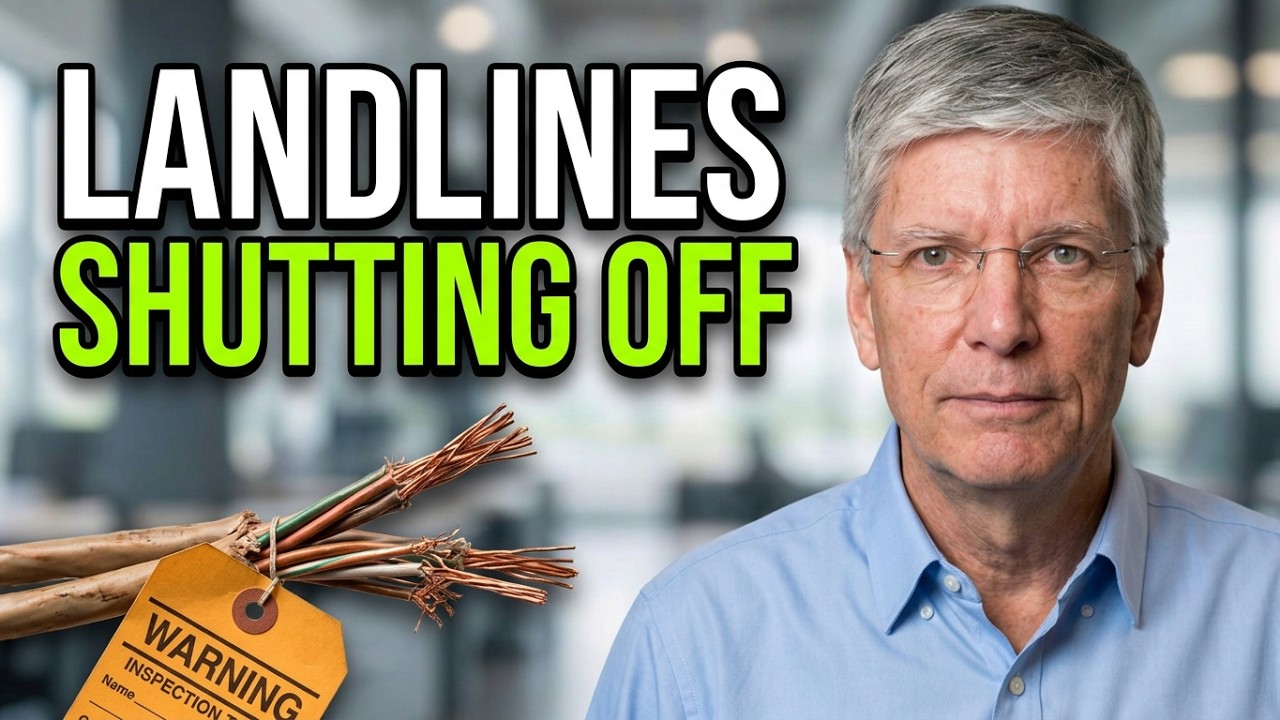
Providers are moving away from copper as customers adopt mobile and internet-based calling and maintaining the remaining network becomes more costly. Weather damage and repair difficulties also influence the transition.
A telephone plugged into a wall socket does not establish that it still uses copper telephone service. The connection may already pass through a cable modem, fiber terminal, or internet adapter. Trace the telephone connection and match it with the service description on your bill before treating a copper notice as applicable.
For an organization with several buildings, make this distinction at each address. The front office may already use digital calling while an elevator or alarm still depends on a separate copper line. Treat each number and connected device as its own migration item.
What replaces landlines, with or without broadband
Replacement services include VoIP, meaning voice carried over an internet connection, and cellular equipment that supplies dial tone through a mobile network. Fiber and cable can carry digital voice. Some arrangements let you retain an analog handset through an adapter or base station.
Choose the connection around the location. Internet-based calling needs working connectivity; cellular replacement needs usable coverage where its equipment operates. Buying a retail broadband subscription is not necessarily required for a cellular telephone service, but that does not preserve the copper network. Where neither connection works adequately, resolve the replacement arrangement before scheduling the move.
Separate handset reuse from system reuse. Keeping a familiar receiver is a different requirement from preserving a PBX, the equipment that manages extensions. Read the PBX phone reuse guide when deciding which existing telephones belong in the replacement project.
Keep emergency calls and connected equipment working
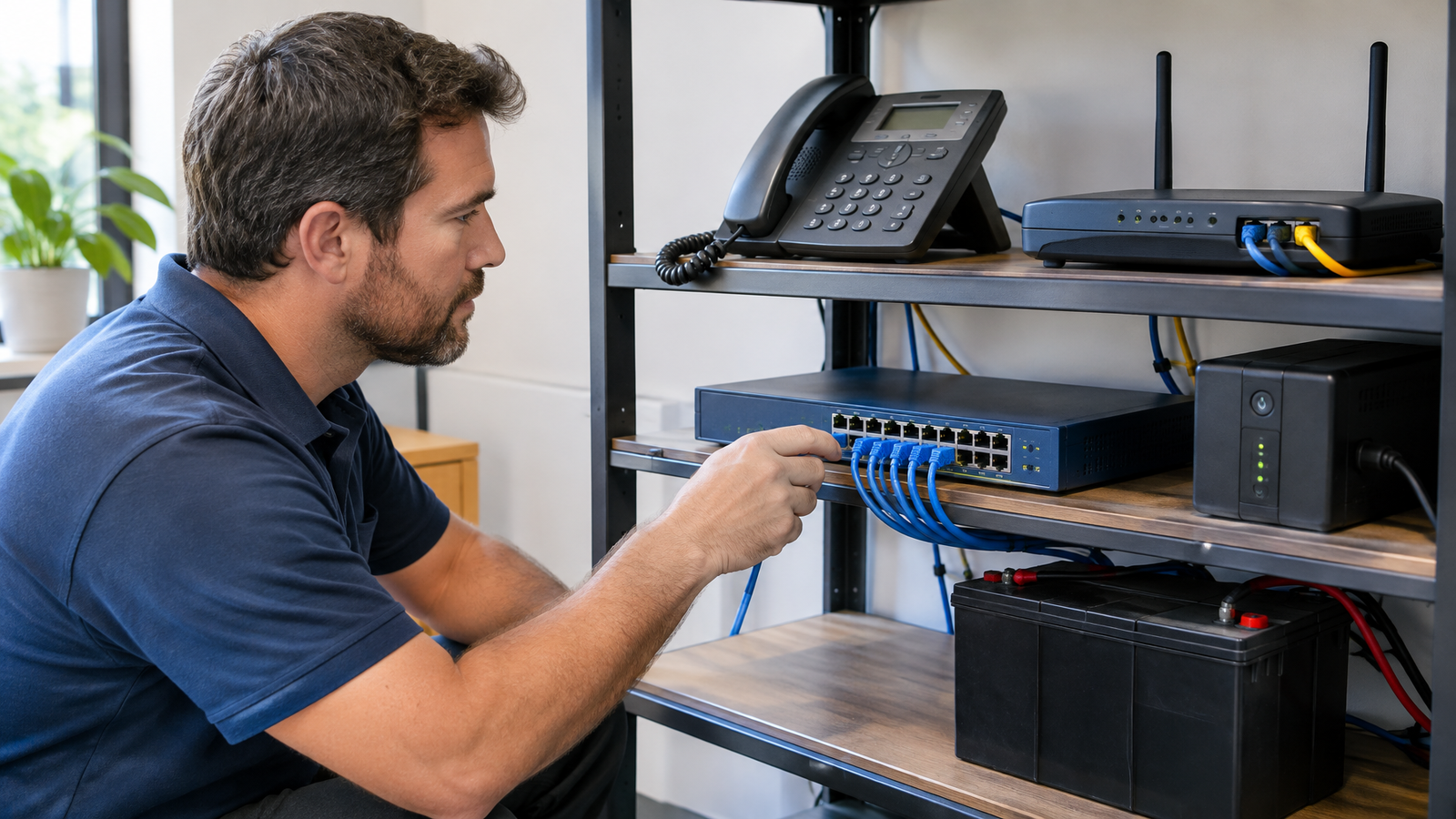
Digital calling changes the power requirements. VoIP can operate during a building outage when internet access remains available and the required equipment has backup power. Copper service can also fail when network infrastructure is damaged.
Include the modem or fiber terminal, router, switches, and phones in the outage plan. Test alternate answering outside the building, and make emergency-calling location setup part of installation. Give employees instructions for reaching help when the normal calling path is unavailable.
Medical alerts, security and fire alarms, elevator phones, fax machines, and door-entry systems need device-specific treatment. A dial tone alone does not demonstrate that an alarm reaches its monitoring center. Have the responsible equipment company test the intended replacement connection before retiring its existing line. Prioritize people who depend on accessible controls or cannot readily switch to a mobile phone.
Move landlines without losing the published number
Number porting transfers your number between providers. Within the same geographic area, it can work between wireline, internet-based, and wireless services. Have the new provider initiate the transfer, and do not cancel existing service before initiating replacement service.
Build the transfer record around the account holder, service address, account information, and all numbers to retain. Include direct lines and less-visible numbers used by equipment, not only the main reception number.
Schedule incoming and outgoing call tests, reception transfers, and voicemail testing around the cutover. Assign someone to authorize the move and someone to answer staff questions. Use the landline-to-VoIP switching guide for the detailed implementation sequence. For longer-term planning beyond the phone project, the business continuity planning article provides related reading.
Hosted business phone systems for the replacement
Carolina Digital Phone provides hosted business phone systems with access to a business line wherever internet access is available, supporting employees who work away from their desks. This makes hosted calling relevant when replacing landlines also involves coordinating office and remote staff.
Carolina Digital Phone supports auto attendants, call queues, and voicemail-to-email through its cloud telephone service. For reception, those functions can organize where callers go rather than reproducing each old line as an isolated replacement.
Budget for service, equipment, installation, number transfers, connectivity, and optional functions together. Carolina Digital Phone offers a free assessment of current telephone services, contract-free plans, a 100% money-back guarantee, and $100 off account setup, number porting, and account activation when customers mention the VoIP for Business page and code word “switch.”
Bring your service notice, bills, number inventory, and connected-equipment list to the business phone service inquiry.
Frequently Asked Questions
Do people still have landline phones?
Yes. In July to December 2025, 1.6% of US adults were landline-only users, alongside people who used both landlines and wireless phones.
Can you still buy old-fashioned landline phones?
Yes. Corded and cordless home telephones remain available, including traditional trimline handsets. Purchasing a handset does not provide telephone service.
How much do landlines cost per month?
Traditional residential landlines typically cost $30 to $50 per month, with bundles potentially costing more. This is home-service guidance, not a business-system quote.