Opinion by Nicky Smith, Founder, Carolina Digital Phone. Published November 18, 2026. In this article, I share my perspective on technology outages and their impact on businesses and individuals.
I have read some version of the same sentence all week: this was not a cyberattack.
Microsoft said it. The FAA said it. JPMorgan Chase said it. United Airlines said it. On Tuesday, the Secretary of State said it about all of them at once.
They may all be right. I think they probably are. I have also spent more than 45 years building and running technology, and I have learned that “not a cyberattack” is the first answer an organization gives. It is rarely the complete one. This is my opinion on why that matters, and on what I think every business owner should do while we wait for the rest.
Six outages in seven days
If you were traveling, banking, or just trying to send an email, you already know the week. For the record, here it is.
- Tuesday, November 10. Apple’s iCloud mail, calendar, contacts, photos, and sign-in were down for about two hours.
- Thursday, November 12. Microsoft 365 failed for hours, taking Outlook and Teams with it. Microsoft later traced it to a problem introduced during an earlier network capacity upgrade.
- Friday, November 13. The FAA held every departing flight in the country for about four and a half hours. The Christian Science Monitor noted it was only the second nationwide ground stop since September 11, 2001. The FAA has posted its own questions and answers.
- Monday, November 16. JPMorgan Chase transactions slowed, and other banks felt it. The Associated Press reported the bank blamed a software bug in an on-premises hardware system.
- Monday, November 16. United Airlines had a system outage that delayed departures. The airline said it saw no sign of a cybersecurity cause.
- The same week. An internal National Security Agency network was reported disrupted and under investigation.
Secretary of State Marco Rubio told reporters there is “zero evidence” the incidents are connected to each other or to hostile actors, as Yahoo News reported.
I believe them. I also want to read the report.
Let me be plain about where I stand, because this is a week for plain talk. I have no evidence that any of these was an attack. Nobody posting theories online has any either. The most likely explanation for a bad week is still a bad week.
Most large outages are accidents. The last nationwide ground stop, in 2023, came down to a damaged database file and a procedure that was not followed. In July 2024, a single faulty update from a security vendor crashed millions of Windows computers and grounded airlines worldwide. No enemy was involved in either one. Big systems are complicated, and people change them every day.
So why not take the statements and move on? Because of what a first-day statement cannot tell you.
Three things a first-day statement cannot tell you
It cannot tell you what has not been examined yet. “We found no evidence” is a sentence about the search so far. In the FAA’s case, SecurityWeek reported that the FBI and other agencies were still reviewing a software update to the network that links air traffic control, days after the public was told what happened.
It cannot tell you the root cause. The first thing engineers find is usually the thing that broke. Why it was able to break is a different question, and it takes weeks to answer. A commentary in Fortune walked through how Microsoft’s own account changed over a day and a half as its engineers worked the problem. I do not hold that against them. I have been in that seat at three in the morning. It is simply why I wait for the written report.
It cannot tell you whether it will happen again. Only the fix can tell you that, and the fix comes last.
Why experienced operators keep an open mind
There is a piece of history every network engineer knows. When the Stuxnet worm damaged Iran’s uranium centrifuges around 2010, the control room screens showed normal readings the whole time. The operators spent months believing they had faulty equipment. It was an attack built to look like ordinary failure.
That is the rare case. It is also the reason professionals do not close the file until the investigation is finished. And the environment has changed. On Monday, Google’s Threat Intelligence Group published a report titled “The era of autonomous attacks has arrived,” describing AI systems that find a newly patched flaw and build an attack for it without a person at the keyboard. I have seen nothing tying that report to last week, and I am not tying it either. I mention it because the speed of the threat is no longer theory.
Add a tense world, including CNN’s reporting this week on intelligence about Iranian planning that officials themselves are still debating, and you can understand why Americans felt uneasy. No public evidence connects any country to these outages. The unease is real anyway, and “trust us” does not settle it. A published report does.
The standard I hold my own company to
I would be a hypocrite to ask Microsoft and the FAA for something I will not do myself. So here is what I believe any provider owes its customers after an outage, and what we commit to at Carolina Digital Phone.
- Tell customers while it is happening. We post incidents and maintenance on our public status page in real time.
- Say what changed. Almost every outage follows a change. Name it.
- Write down the root cause when you actually know it, and say so if you do not know yet.
- Explain the fix in language a customer can repeat to their own boss.
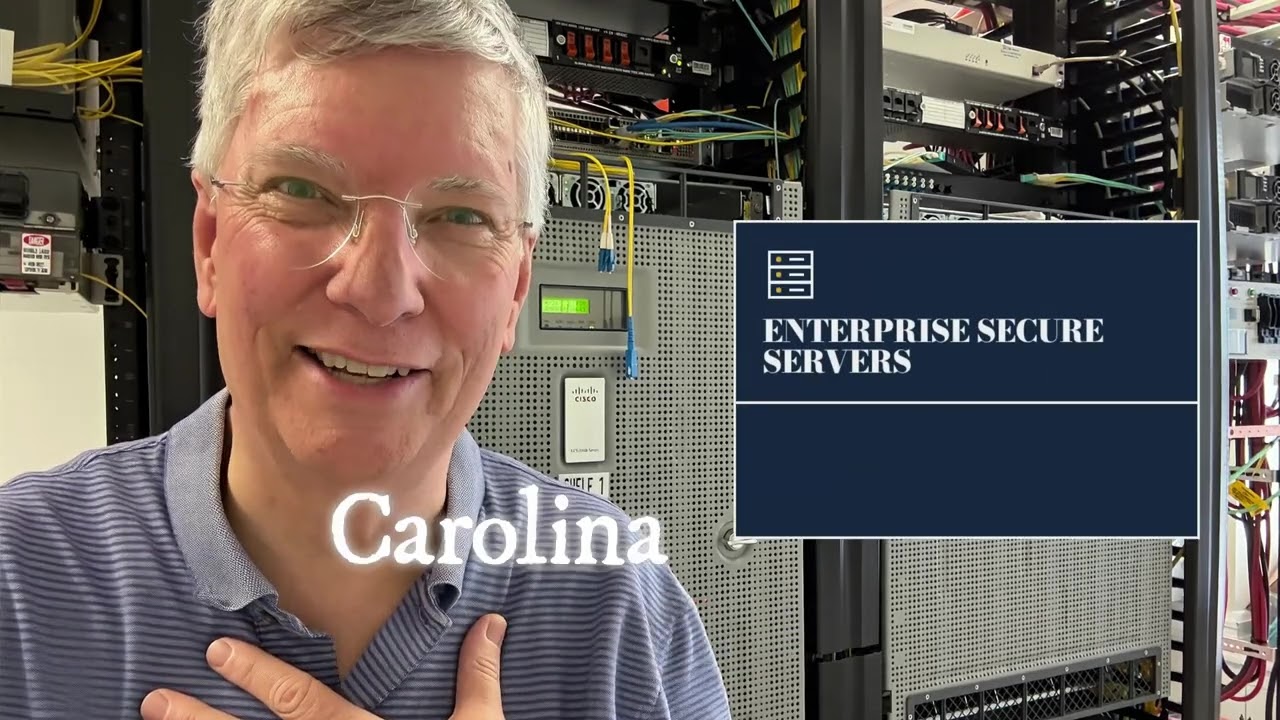
We also build as though failure is certain, because it is. Our platform runs in three geo-redundant data centers. We use multiple upstream network paths with full BGP routing, so traffic can find another way around a carrier that fails. We encrypt data and keep active cybersecurity threat monitoring in place. And when you call, you reach people in North Carolina who run the system, not a ticket queue several time zones away.
We made a short video about how that works:
What I would do this month if I ran your business
You cannot fix the FAA. You can decide how exposed your own company is the next time a giant stumbles.
- Separate your phones from your email platform. If one vendor carries your email, chat, files, and phones, one bad day takes all four.
- Make sure calls can reach cell phones. If the office loses power or internet, your main number should still ring somewhere. Our mobile app and call routing features are built for that.
- Keep a second way to reach customers. Business texting from your company number works when email does not.
- Ask every vendor the outage questions before you sign. Where is your status page? When did you last publish a root-cause report? May I read it?
- Test your plan once. Unplug the office internet for ten minutes on a slow afternoon and see what your callers hear.
Where I land
I hope every one of last week’s explanations turns out to be complete. If the final reports say router, upgrade, and software bug, I will be relieved, and I will say so.
Until then, I am going to keep doing two things at once: taking officials at their word, and waiting to read the report. I would encourage you to do the same, and to spend the time in between making your own business harder to knock down. Outages will keep coming. Attacks will keep being attempted. Preparation works against both.
I wrote a longer version of this argument, with the five questions I would ask after any outage, on our small-business site: When the Biggest Systems Fail, We Should Ask Harder Questions.
Talk with our team
If you want to talk through how your phones and messaging are protected, or compare notes on what resilience looks like in practice, contact the experienced team at Carolina Digital Phone. To talk to someone right away, call (336) 544-4000, or click here for a quick call back from a member of our team.
Nicky Smith is the founder of Carolina Digital Phone, a North Carolina provider of cloud phone systems, business messaging, and AI reception services since 2000.